

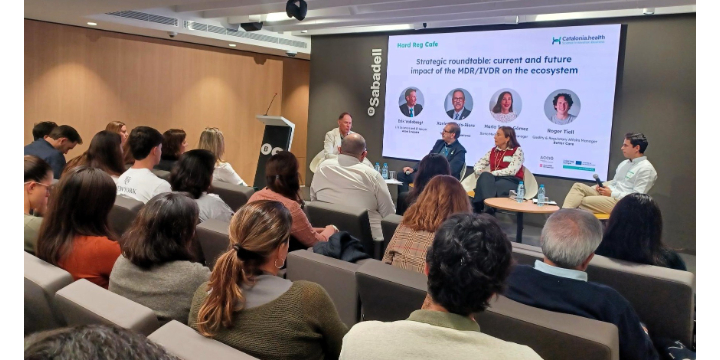
The MDR and IVDR, and the changes now being proposed, are among the topics that raise the most questions in our sector. On 4 November, more than fifty professionals from medical device and digital health companies, start-ups and consultancies filled the auditorium at Hub BStartup Banc Sabadell to understand where the regulation stands and what lies ahead.
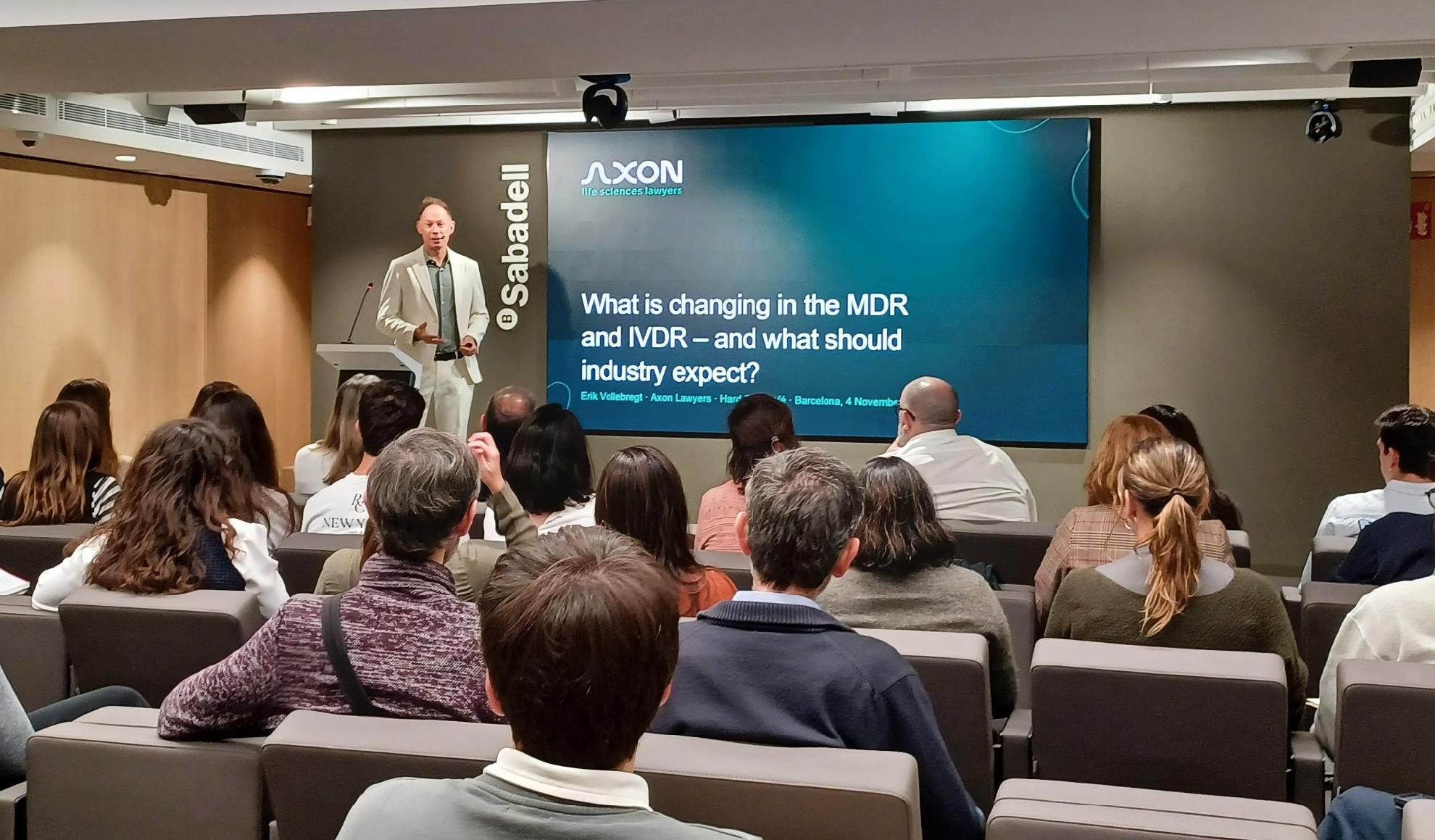
The 12th edition of the Hard Reg Cafe brought together 54 attendees in the morning session, out of 62 registrations. In the afternoon, around 15 participants joined an exclusive workshop with Erik Vollebregt at the Barcelona Science Park.
For Catalonia.health, the response confirms something we see every day: when we put on the table the issues that truly concern our members, the community responds. This session grew from their needs, and they made it their own.
The attendees' feedback says it all. What they valued most was hearing from experts and real-life cases, getting a broad view of the proposed MDR/IVDR changes and their impact on SMEs and start-ups, and the chance to meet Erik Vollebregt in person.
What is changing and what industry should expect
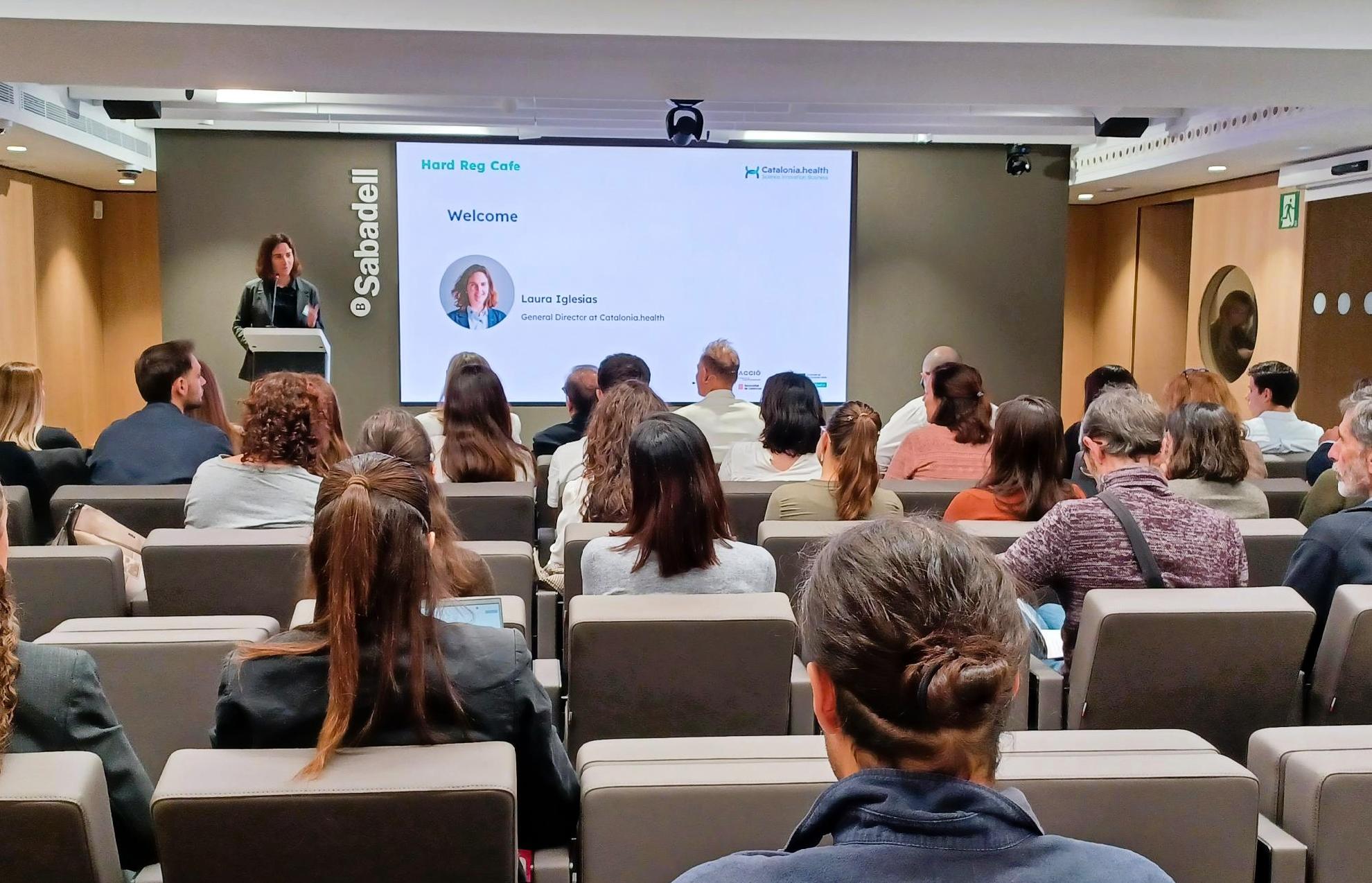
Laura Iglesias, General Director of Catalonia.health, opened the day before handing over to Erik Vollebregt, life sciences and IP lawyer at Axon Lawyers. Vollebregt has been closely involved in the MDR and IVDR targeted revision process, and his keynote, "What is changing in MDR and what should industry expect?", offered a clear view of the proposal.
To explain where we stand, Vollebregt compared the MDR to the formation of planets: almost ten years after its adoption, the regulation is still taking shape, and the work on it is far from finished. The targeted revision now on the table is the latest stage in that process, and understanding where it is heading is key for companies planning their next steps.
The business impact of the counter-reform
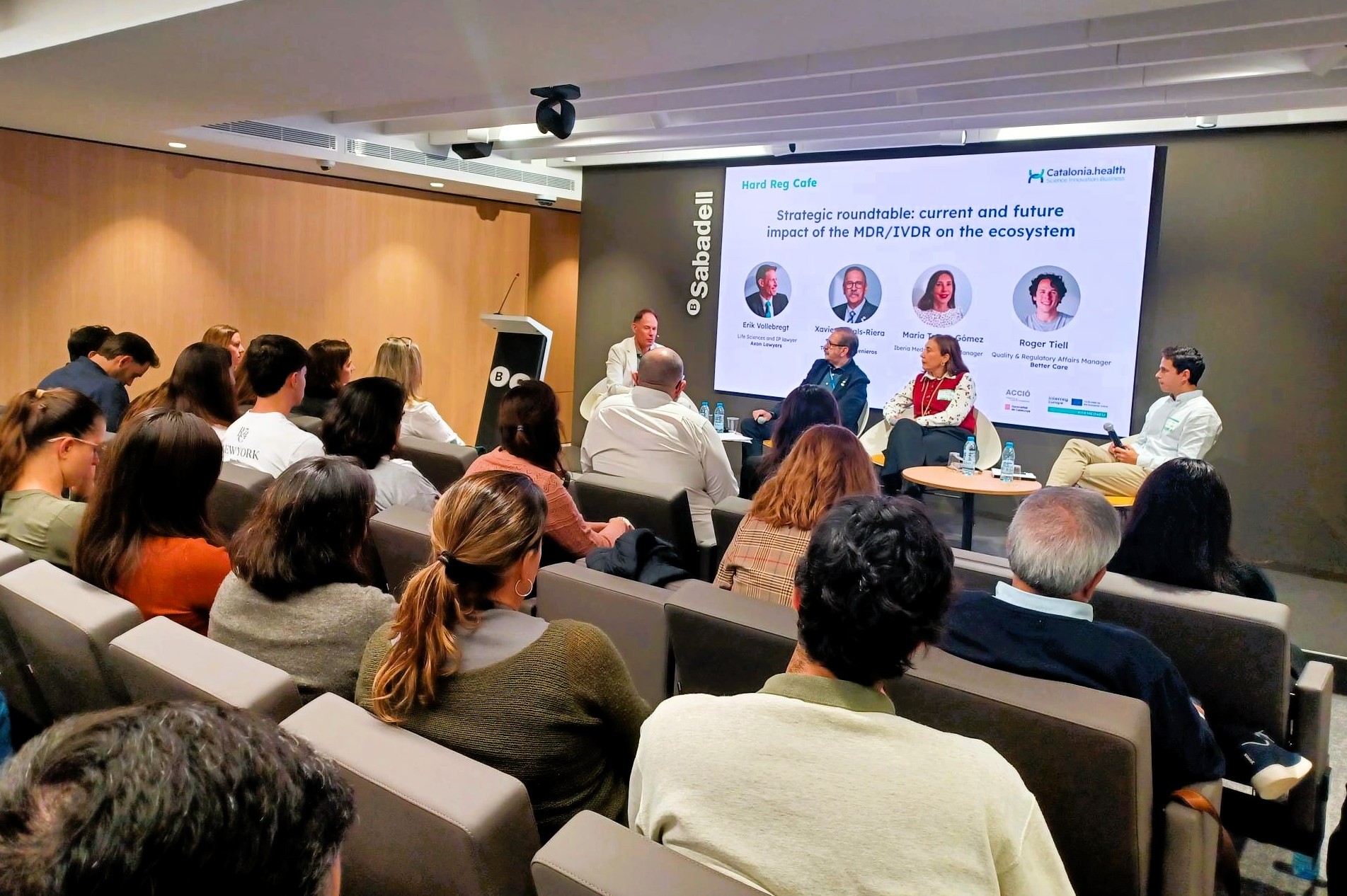
The strategic roundtable, moderated by Vollebregt, looked at the current and future impact of the MDR/IVDR counter-reform on the ecosystem. Xavier Canals-Riera, Director at Tecno-Med Ingenieros, María Teresa Gómez Manzano, Iberia Medical Devices Manager at SGS, and Roger Tiell Prunera, Quality & Regulatory Affairs Manager at Better Care, shared their view on its business implications and on the room it leaves for innovation.
Lessons learned and next steps
The expert panel, moderated by Marc Masa, Head of Department for Health & Biomedicine at Leitat, focused on previous experiences and what to do from now on. Talyta Carteano, Director of Medical Devices at Asphalion, Jaime Punter-Villagrasa, CTO and Quality Manager at Onalabs Inno-Hub, and Noelia Gil Martin, Quality Director at Biosystems, answered many of the questions the audience sent in through Slido.
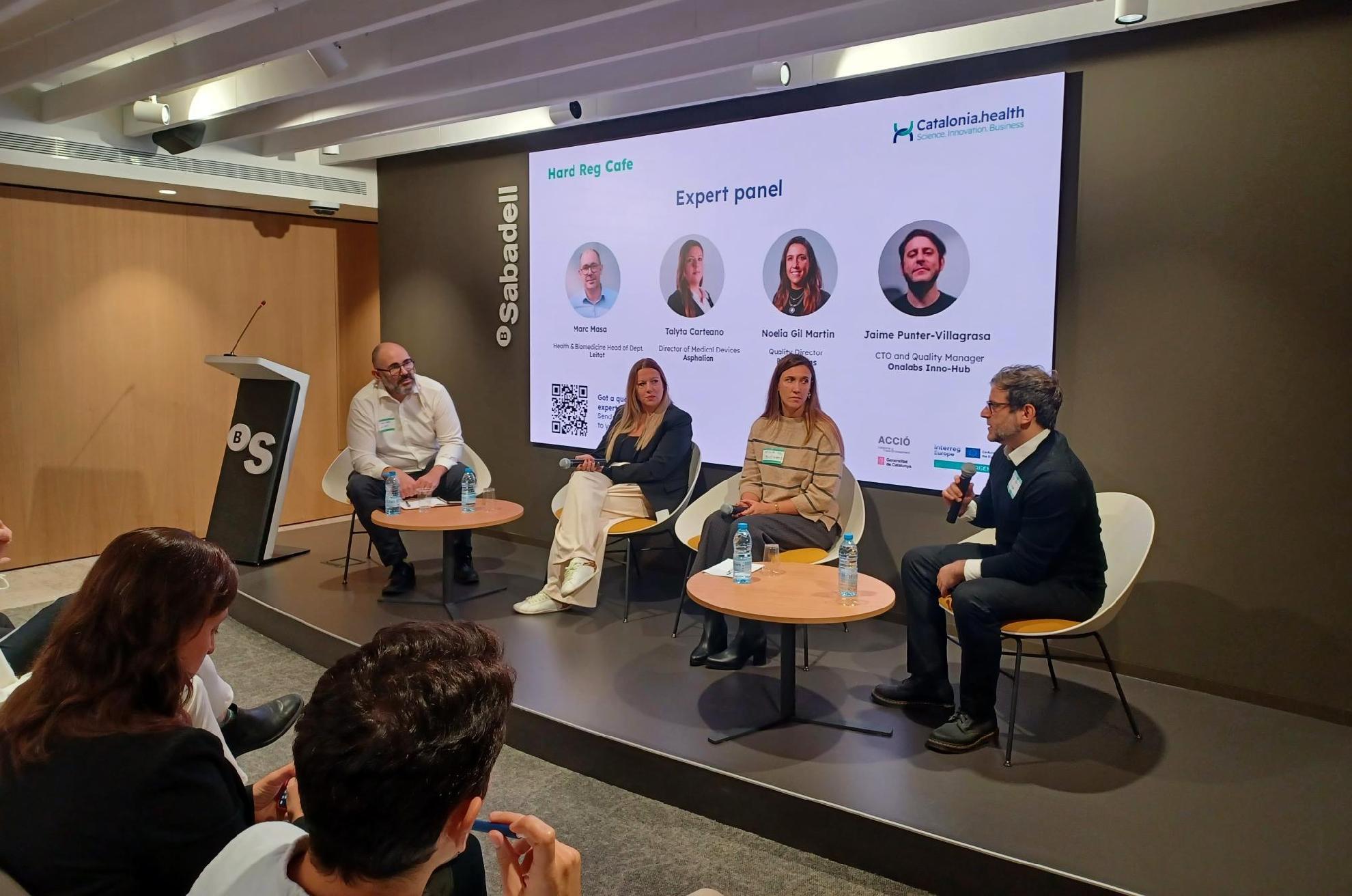
In the afternoon, the workshop with Vollebregt gave participants the chance to work through their own cases in a small-group format.
Thank you
This Hard Reg Cafe was possible thanks to many people, and we want to thank them all.
Thank you to Erik Vollebregt for travelling from Amsterdam to share his knowledge with us, and to Francesc Aranega, Partner at Aránega Miravitlles & Suárez and Catalonia.health member, who put us in touch with him.
Thank you to all the speakers and moderators of the roundtable and the expert panel for bringing their experience so generously, and to all the attendees for their questions and participation.
Thank you to Catalonia.health's internal committees, specifically Innovation, Digital and Business Development, who promoted this session.
Thank you to Banc Sabadell for hosting us at Hub BStartup.
And thank you to ACCIÓ and Interreg Europe, through the RISEMED4EU project, co-funded by the European Union, for their support.
What are the Hard Reg Cafes?
They are working sessions to share concerns on regulatory matters, discuss topics of interest or bring a prestigious guest from this strategic field to the companies and start-ups of Catalonia.health.



Comments