

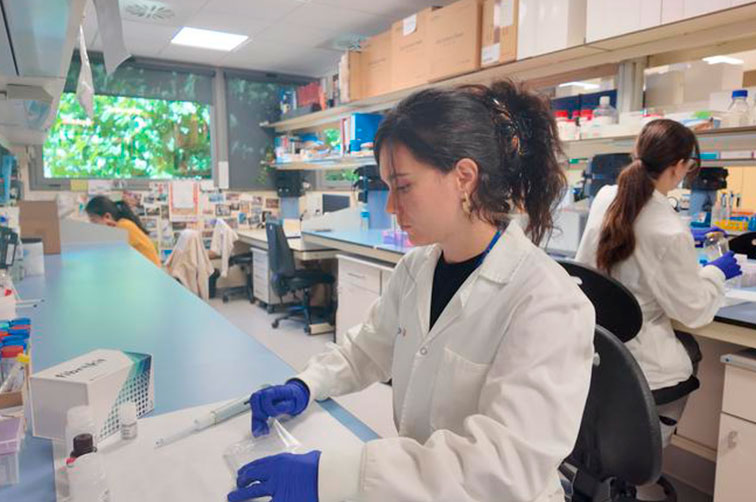
The Germans Trias i Pujol Research Institute (IGTP), in collaboration with the Nephrology Service of Hospital Germans Trias and the spin-off Debios Diagnostics, all three members of Catalonia.health, are driving the PROMORFI project, a translational innovation initiative aimed at improving the detection and monitoring of chronic kidney disease through new non-invasive diagnostic tools.
An Urgent Medical Need
Chronic kidney disease is an often-underdiagnosed condition that can evolve silently for years until advanced stages. One of the main mechanisms responsible for disease progression is the accumulation of fibrosis in the kidneys, a scarring process of renal tissue that can currently only be accurately diagnosed through a renal biopsy, an invasive procedure with limitations for continuous patient monitoring.
FIBROKIT: Non-Invasive Detection of Renal Fibrosis
The PROMORFI project (Development and Clinical Validation of a Non-Invasive Test for the Diagnosis and Monitoring of Renal Fibrosis in Patients with Chronic Kidney Disease) aims to develop and clinically validate FIBROKIT, a new diagnostic tool based on the analysis of the vitronectin (VTN) protein in urine samples, which allows the detection and monitoring of renal fibrosis in a non-invasive manner.
The project, which will run until 2028, is funded through the Public-Private Collaboration Projects call of the State Research Agency, with a total budget exceeding €1.7 million, and is being developed jointly between Debios Diagnostics and IGTP.
The technology includes two complementary versions of the test: FIBROKIT-ELISA, intended for clinical laboratories to obtain high-precision quantitative results, and FIBROKIT-LF, a rapid test that will allow periodic patient monitoring, even from home. This approach will combine hospital evaluation with remote monitoring, improving patient follow-up and contributing to more personalized disease management.
Clinical Validation and Translational Research
The project will include validation of the biomarker in cohorts of patients with chronic kidney disease and the execution of a prospective clinical trial, which will evaluate the clinical utility of this system under real care practice conditions. This line of research was born several years ago from joint work with the hospital's Nephrology Service, led by Jordi Bover, co-leader of the Research in Kidney Diseases (REMAR) group.
For Francesc Borràs, principal investigator of the project, leader of the Innovation in Vesicles and Cells for Application in Therapy (IVECAT) research group and co-founder of Debios Diagnostics, the project reflects a way of understanding translational research: "identifying real medical needs together with clinicians, generating scientific knowledge and transforming it into solutions that can improve care practice and, therefore, bring benefits to patients."
Digital Innovation and Patient Empowerment
The project also incorporates a digital innovation dimension with the participation of the Digital Transformation and Health Directorate of Hospital Germans Trias, which works together with the Nephrology care team in developing content for patients with chronic kidney disease that will be integrated into the eSalut app. The objective of these materials is to facilitate more detailed monitoring of the condition by professionals and empower users through self-management of their health.



Comments