

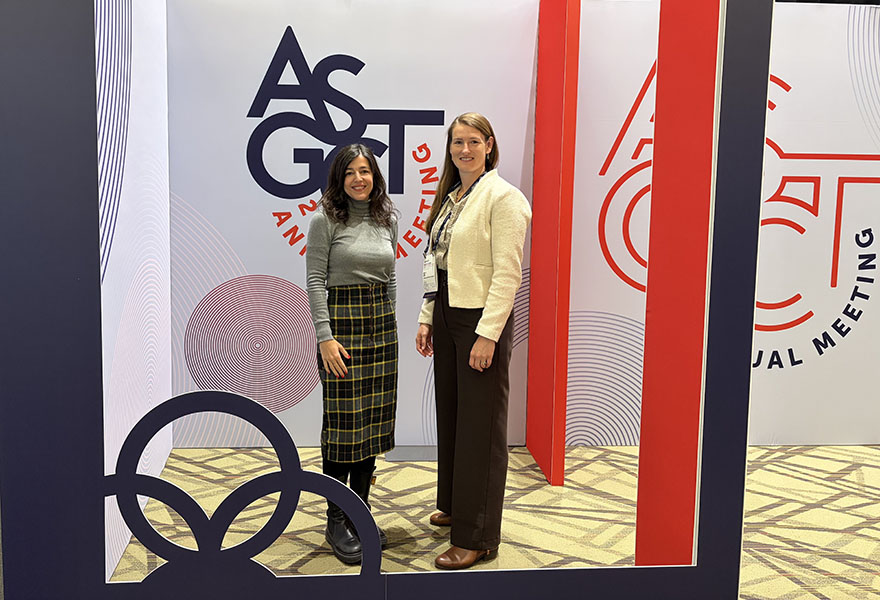
Integra Therapeutics, member of Catalonia.health, has presented new preclinical results of its FiCAT platform at the American Society for Gene and Cell Therapy (ASGCT) congress.
Integra Therapeutics' Cell Engineering team has presented preclinical data demonstrating that the FiCAT platform is capable of simultaneously inserting up to four therapeutic genes into a safe, predefined location in the genome, and turning off an unwanted gene, all in a single intervention. Until now, this level of precision and multiplexing in a single step had not been demonstrated.
The results have been selected for an oral presentation at the 29th Annual Meeting of the American Society for Gene and Cell Therapy (ASGCT), held from May 11 to 15 in Boston (Massachusetts).
Simplify the manufacture of CAR-T therapies
The current manufacturing of CAR-T therapies requires multiple steps to introduce each genetic modification, which increases the complexity, time and cost of the process, and limits the amount of genetic information that can be incorporated into the final product. The FiCAT platform, on the other hand, allows all modifications to be made in a single step.
In a direct comparison with retroviral and lentiviral vectors (LVVs), which are the current standard in the manufacture of CAR-T therapies, FiCAT-modified T cells matched or exceeded LVVs in key indicators such as cell viability, tumor clearance capacity, and integration-associated genotoxicity. Unlike LVVs, which insert genetic material randomly into the genome—with the risks this entails, such as the activation of oncogenes or variable expression—FiCAT inserts the genetic load in a specific and predetermined place.
Perspectives
Avencia Sánchez-Mejías, PhD, CEO and co-founder of Integra Therapeutics, has pointed out that the results "position the FiCAT platform at the forefront of next-generation CAR-T therapies - safer, more capable and scalable - for the treatment of autoimmune and oncological diseases that currently have no therapeutic alternatives", although he stressed that clinical validation will still be necessary.
Margot Pont, PhD, the company's VP of Translational Development, emphasized that the application of FiCAT in primary T cells opens up new possibilities for the design of next-generation CAR-T therapies, eliminating the size limitations of the current standard and increasing its safety.
The company plans to soon submit a manuscript for publication in a high-impact scientific journal.





Comments