

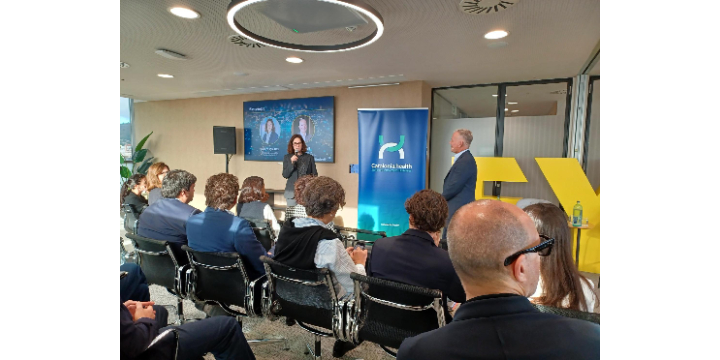
On Thursday 12 November, Catalonia.health and EY held a new session of the NextHealth conference series, dedicated to the new rules of the game for the pharmaceutical industry in an increasingly fragmented world. The session brought together representatives of industry companies and other ecosystem stakeholders, and featured Hugo Dosil, Partner and Life Sciences Sector Leader at EY Consulting; Sol Magaz, Partner at EY Parthenon and Head of the Life Sciences Centre of Excellence; and Claudia Sureda, Life Sciences Director at EY Consulting.
Laura Iglesias, Managing Director of Catalonia.health, opened the event by thanking EY for its commitment to the series and by noting that geopolitics has stopped being a contextual factor and has become an element that directly shapes business strategies, innovation, supply chains, market access and organisational competitiveness.
A world of giants, each with strengths and weaknesses
Hugo Dosil analysed how the global landscape is being reorganised: we have moved from a world dominated by the United States to a world of giants with several very strong players (the United States, China and Europe, plus India). Each has its strengths and its weaknesses. The United States carries an enormous debt; China faces weak consumption, trade tensions and demographic adjustment; Europe suffers from fragmentation and difficulty in making decisions; and India lacks infrastructure. Energy is a good example: the United States is energy independent, China is betting on renewables, and in Europe energy security is at stake.
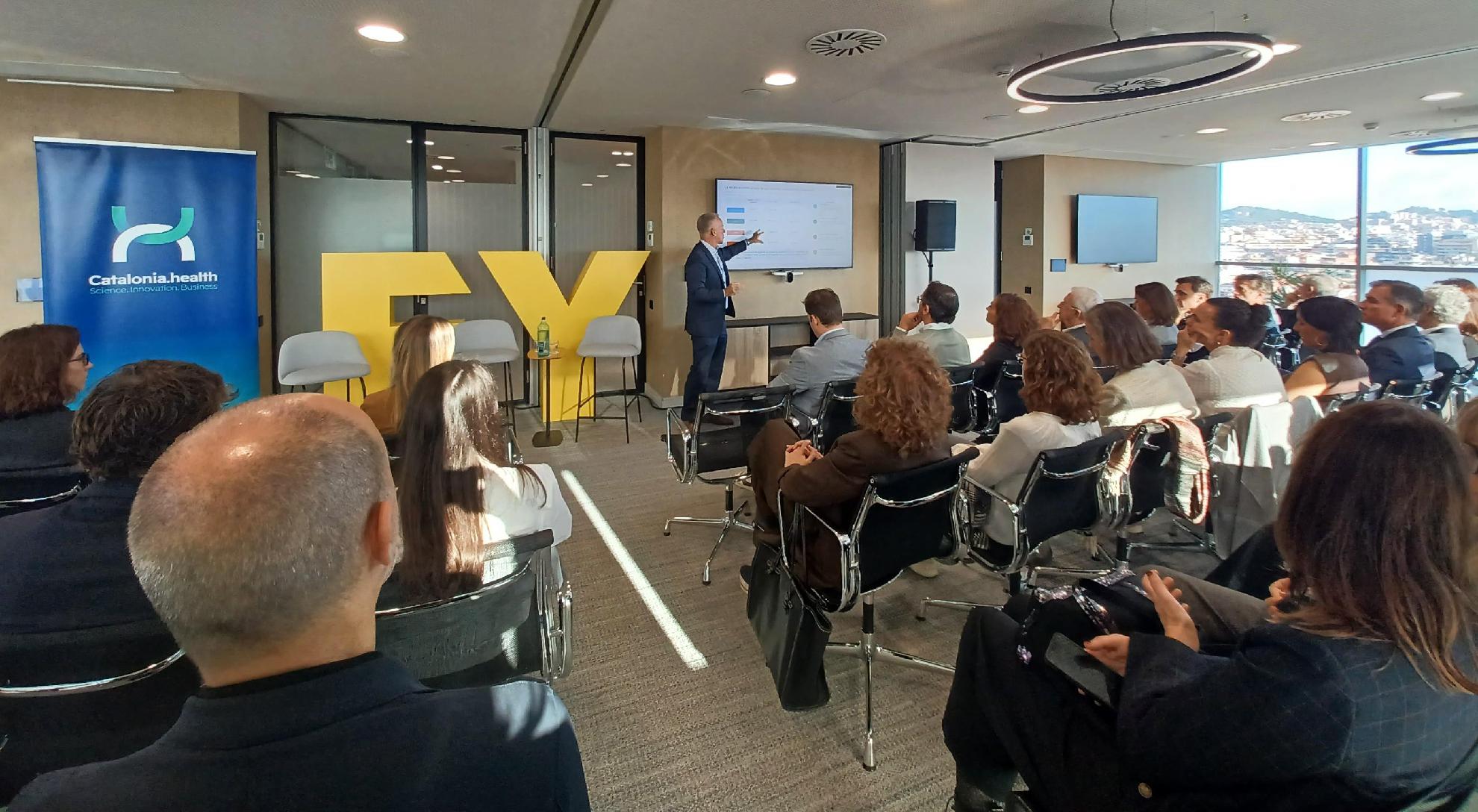
Dosil explained how these forces are putting healthcare systems under strain, with a shortage of 11 million health professionals worldwide, and stressed that the pharmaceutical sector must respond to these new challenges.
China, a scientific superpower, and the adoption barrier
Sol Magaz focused on the role of China, which in the last five years has already launched as many oncology drugs as the United States and has established itself as a scientific superpower. One in every three dollars invested in innovation has gone to China, and 34% of investment in biopharma alliances from the United States and Europe went to China in 2025.
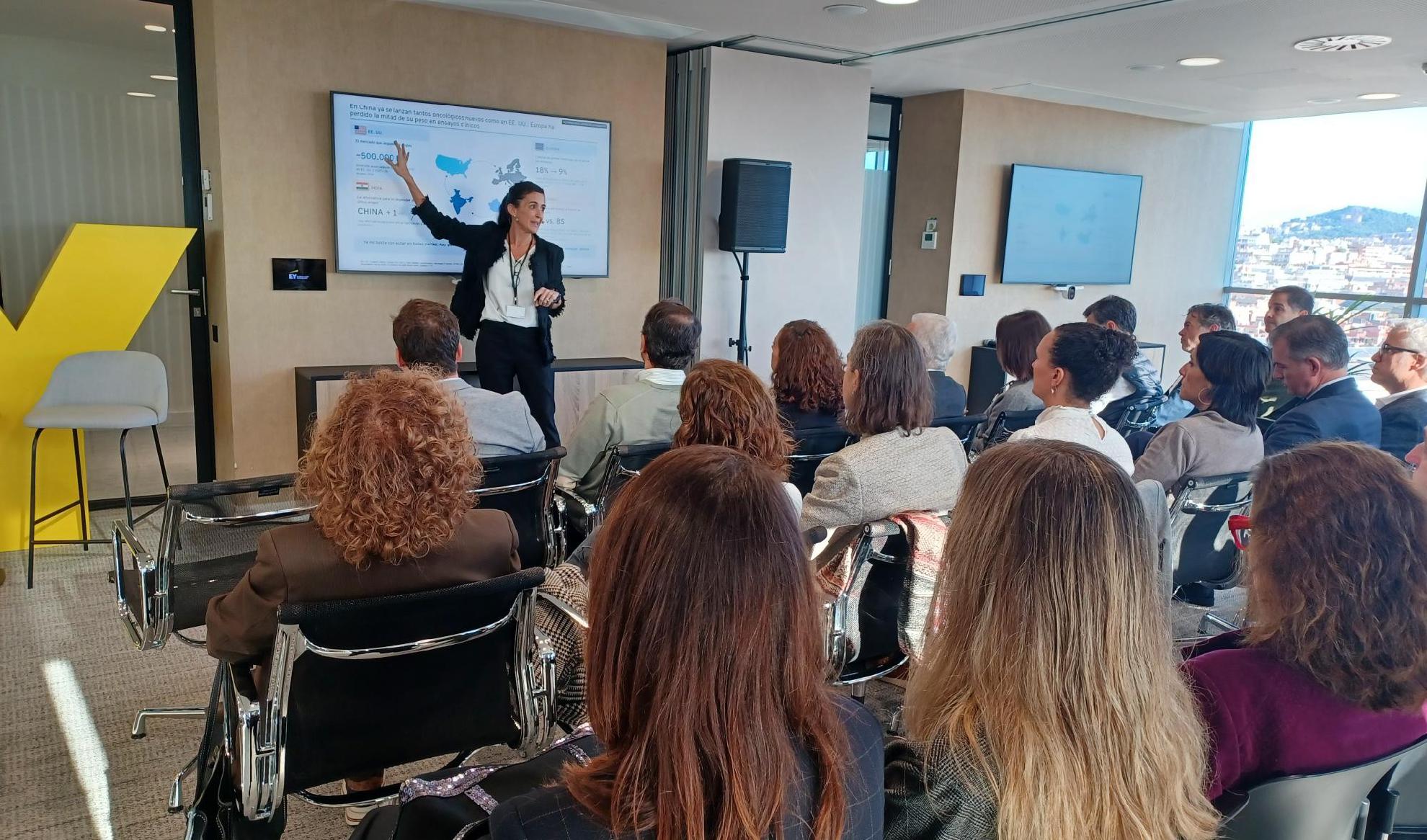
Magaz also warned about supply chain risks: manufacturing where it is cheapest no longer guarantees that a medicine will arrive, or at what price, as the closure of routes such as the Strait of Hormuz shows.
The key message of her talk was the barrier to adopting innovation and new technologies. In Europe, approving orphan drugs takes on average three months longer than in the United States, and in Spain funding a medicine and making it available can take up to 537 days, compared with 158 in Germany. Without a well-prepared and properly funded care system, we will not be able to adopt new technologies: the science is there, but it is very complex to administer.
How organisations should react
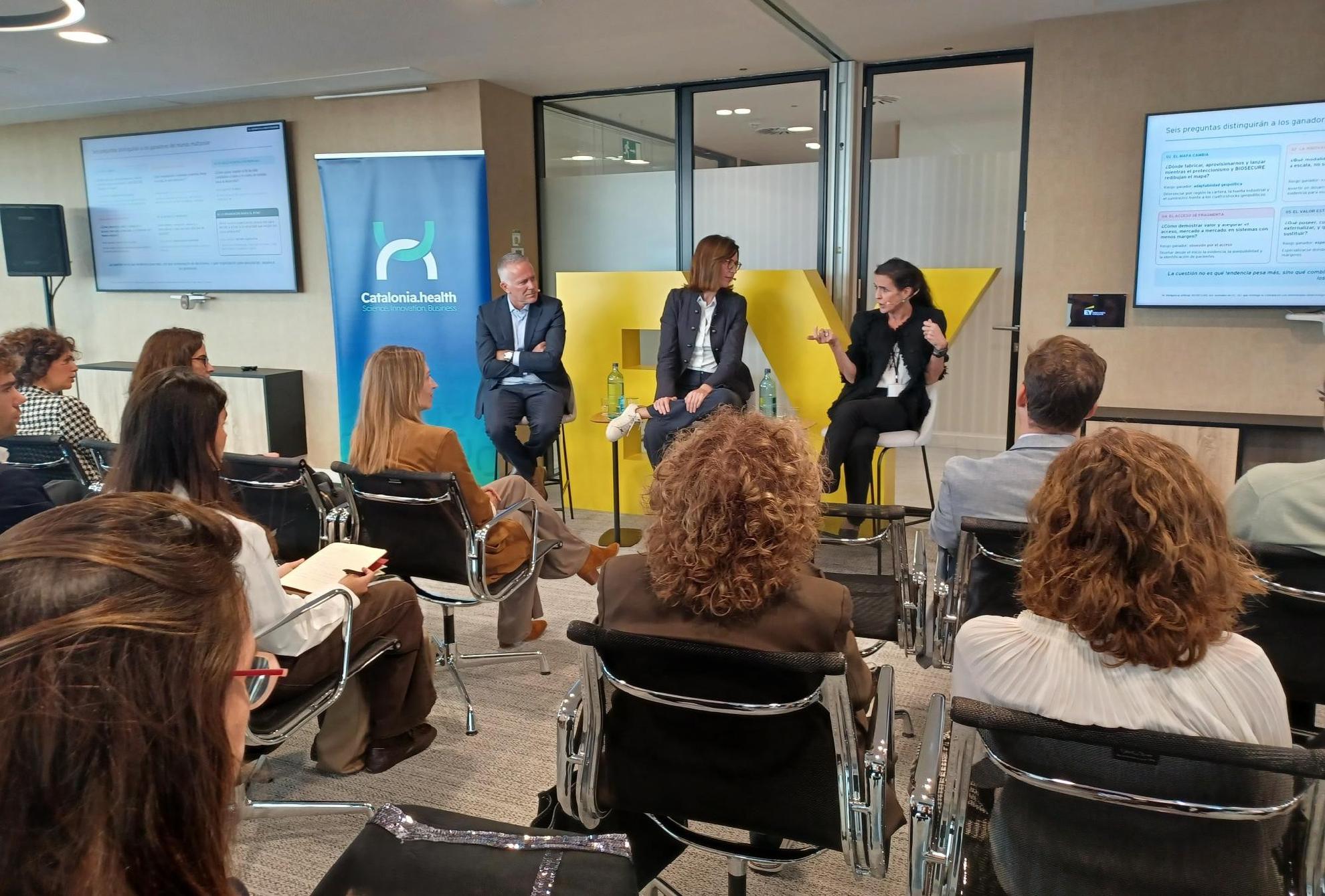
Claudia Sureda focused on how organisations must face this new world order. According to Sureda, those able to reinvent themselves will be the ones that know how to:
Lead in ambiguity.
Work with an “all for one” approach, with every department connected and no silos.
Build hybrid talent.
Adapt quickly.
Among the challenges, she pointed to where to manufacture, because the map is changing, and how to scale an innovation that is accelerating. She also left attendees with an open question: is our organisation ready to act and decide in this new world order?
Open debate
The session closed with a debate with attendees, who raised a fundamental question: how can we make personalised medicine a reality with all these difficulties?
Thank you, EY
At Catalonia.health we want to thank EY for its commitment to the NextHealth series. Being the best partner we could ask for in an initiative of such value, one that brings knowledge to the whole community and that our members value so much, is no small thing. Thank you for making it possible, and for shedding light on the challenges of a sector that must learn to compete and collaborate in a multipolar world.
We will keep working to offer spaces like this, where science, innovation and business meet.



Comments