

Partners from across Europe have officially launched IMPACT, a five-year Horizon Europe project developing new approaches to make personalised CAR Cell therapies faster and more reliable to manufacture, scalable and adaptable to individual patients.
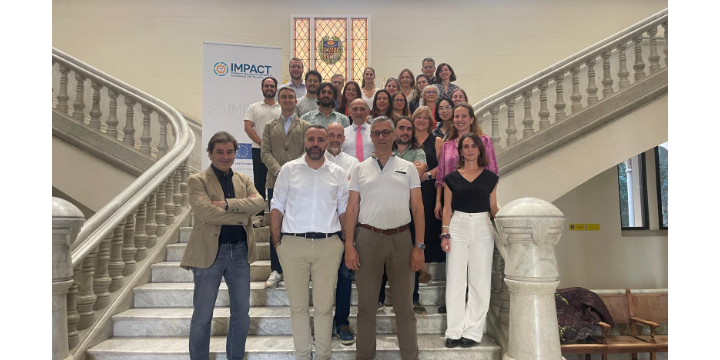
The project’s kick-off meeting at the University of Barcelona on 28 and 29 September brings together representatives of 15 participating organisations and entities from eight countries. The meeting marks the start of a collaboration backed by €8.34 million in EU funding to address manufacturing barriers that can limit access to advanced cell therapies.
For patients facing serious blood cancers, CAR (Chimeric Antigen Receptor) Cell therapies can offer treatment options when conventional approaches have failed. The therapy involves modifying a patient’s own immune cells in the laboratory so that they can recognise and attack specific cancer cells.
However, a major obstacle remains between scientific breakthrough and patient benefit: these highly personalised therapies are complicated, costly and time-consuming to manufacture. Delays in production can affect when treatment becomes available to patients with serious disease.
IMPACT — Intelligent Manufacturing Platform for Advanced CAR Therapies — will tackle this challenge by developing an integrated manufacturing platform combining advanced biomanufacturing, rapid quality control, patient-specific laboratory models and artificial intelligence.
One focus will be the lentiviral vectors used to genetically modify cells. These specially modified versions of viruses act as delivery vehicles, carrying the genetic instructions that enable a patient’s immune cells to recognise and attack their target. IMPACT aims to scale up their production tenfold while developing more sustainable purification and stabilisation methods. New nanotechnology-based quality-control techniques will also be developed to analyse viral particles more rapidly.
Researchers will also create patient-specific Organ-on-Chip models — miniature laboratory systems that reproduce important aspects of human tissues — to investigate how CAR Cells behave and help assess their efficacy and potential unwanted effects.
Connecting these innovations will be an AI-driven digital twin of the manufacturing process. By bringing together data from production, quality control and patient-specific models, it could help identify problems earlier and support more consistent and individualised manufacturing.
The project will also explore ways to reduce material use, plastic waste and the environmental impact of manufacturing. Its longer-term goal is to help make CAR Cell production faster, more reliable and more scalable so that more patients can benefit from these therapies.





Comments