

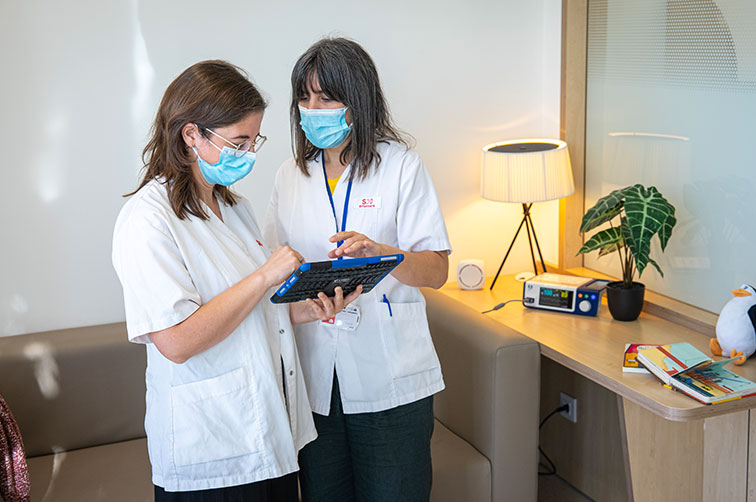
La gestió de pacients pediàtrics ha experimentat un important salt qualitatiu en els darrers anys, amb una creixent personalització dels tractaments i una millora contínua de l'experiència del pacient durant l'ingrés hospitalari. Paral·lelament, l'avenç tecnològic ha impulsat l'augment de l'hospitalització domiciliària, tant en processos de recuperació com en casos de malalties agudes que requereixen atenció mèdica.
Segons l'OMS, el 99 % de la població mundial està exposada a nivells de contaminació potencialment nocius. I encara que sol associar-se a espais exteriors, els interiors -on passem el 90 % del temps- poden estar fins a cinc vegades més contaminats. Materials de construcció, ventilació deficient i mals hàbits quotidians, converteixen la llar en un entorn que pot afectar negativament la salut física i mental, especialment en pacients vulnerables com els pediàtrics.
En aquest context sorgeix AYRA, una iniciativa de recerca industrial impulsada pel consorci del mateix nom, en la qual l'Hospital Sant Joan de Déu Barcelona, CATALONIA.HEALTH, la Fundació BCD, Domestic Data Streamers, PUMBA i TheLeftBit, busquen desenvolupar i validar un sistema integral específicament dissenyat per a monitorar la qualitat de l'ambient en entorns domiciliaris amb pacients pediàtrics. El projecte s'integra en el programa SJD a casa i està alineat amb la Unitat de Salut Mediambiental Pediàtrica de l'Hospital Sant Joan de Déu Barcelona.
AYRA s'estructura en dues fases complementàries. En la primera, ja en marxa, s'ha creat un sistema integral de monitoratge ambiental i una plataforma digital pera ajudar els professionals sanitaris a la presa de decisions més informades sobre l'entorn en el qual es recuperen els nens. La segona fase, prevista per a 2025-2026 i centrada en les famílies, comptarà amb una eina digital específica que els permetrà entendre millor la qualitat ambiental dels seus habitatges i com aquesta pot influir en la salut dels seus fills.
El projecte combina tecnologia avançada com l'ús de machine learning per a interpretar dades ambientals amb un enfocament centrat en el benestar pediàtric. A través de recomanacions personalitzades, AYRA no només millora la recuperació dels pacients, sinó que també busca promoure el disseny integratiu i la innovació empresarial en el sector salut, alineant-se amb estratègies hospitalàries d'avantguarda.
Resultats preliminars de l’estudi
Després d'analitzar la qualitat de l'aire en 12 domicilis de pacients de l'Hospital Sant Joan de Déu Barcelona, s'ha demostrat que, en la majoria dels casos, podria ser potencialment perjudicial per a la salut en diferents graus i períodes de temps.
Un dels factors més rellevants va ser la humitat relativa, que en la majoria dels pisos analitzats va superar el llindar recomanat del 40–60%. A més, en alguns casos es van aconseguir nivells del 80 % durant gairebé tot el dia, amb el consegüent risc de formació d'humitats i fongs. En els habitatges situats en planta baixa, la humitat mitjana va ser del 65%, mentre que en plantes superiors descendia fins al 55%.
Tots els domicilis van superar en algun moment del dia els nivells recomanats de partícules sòlides i líquides en suspensió (pols, pol·len o emissions derivades de la combustió de vehicles), sent el més habitual que aquesta exposició es prolongués durant, almenys, una quarta part de la jornada. Les dades també mostren una correlació entre una ventilació deficient i l'acumulació de contaminants com el monòxid de carboni (CO) i partícules en suspensió, la qual cosa reforça la importància d'intervenir sobre l'entorn domèstic com a part de l'abordatge clínic.
“Aquest estudi ens ofereix una oportunitat valuosa per a entendre millor com influeix l'entorn domèstic en la salut dels nens. Gràcies a AYRA, podem monitorar i millorar la qualitat de l'aire a casa, entenent millor el seu paper en l'aparició i recuperació d'unes certes patologies. És un pas important cap a una atenció pediàtrica més preventiva i personalitzada”, afirma la Dra. Elena Codina, pediatra de l'Hospital Sant Joan de Déu Barcelona.
AYRA compta amb el finançament de la convocatòria 2024 AEI (Agrupación Empresarial Innovadora) del Ministerio de Industria y Turismo, i ha estat el tercer projecte millor valorat dels 313 presentats.
Foto: Elena Codina (esquerra), pediatra de l’Hospital Sant Joan de Déu, i Ane Achotegui, infermera del mateix centre, revisant les dades registrades al domicili d’un pacient.
Comentaris